
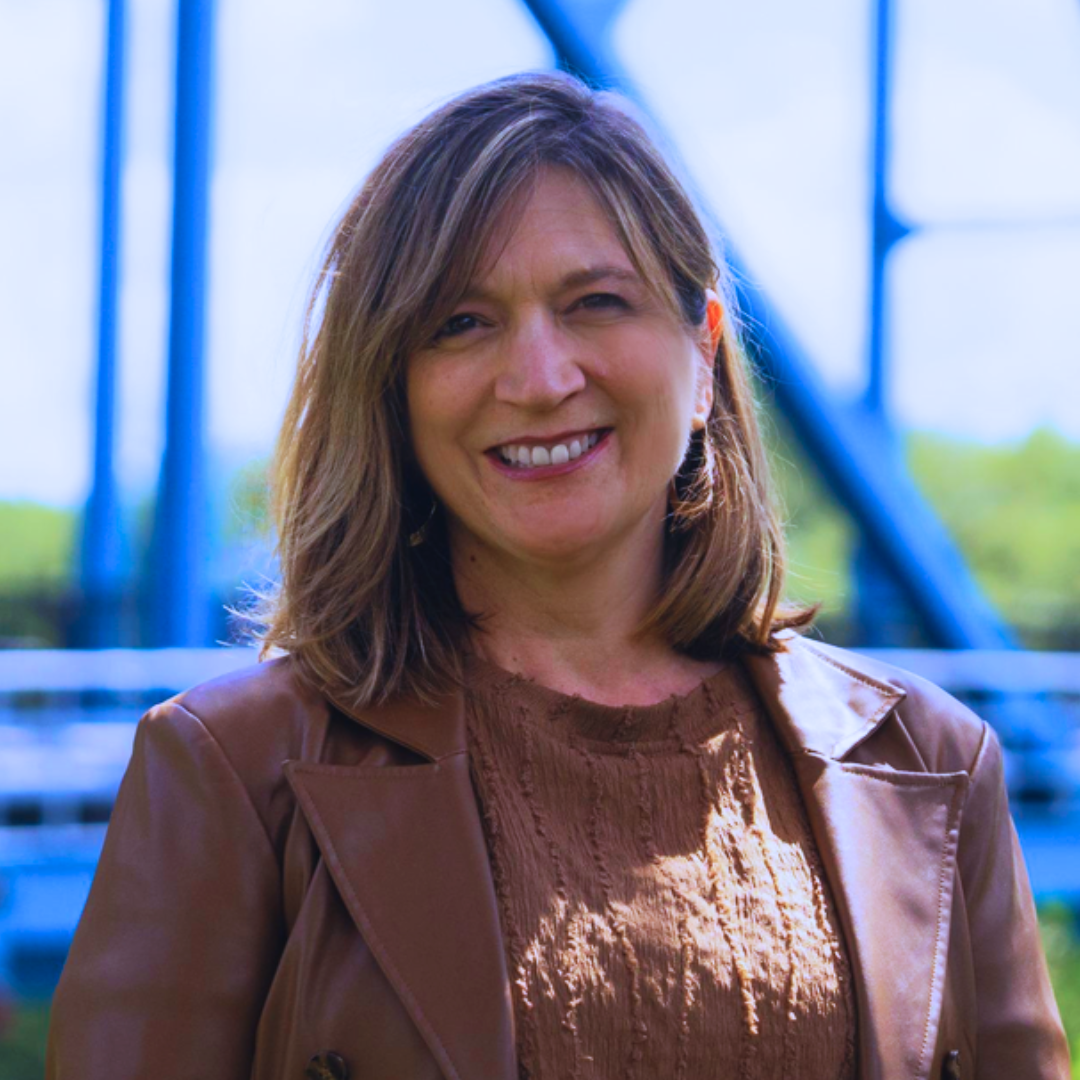
Senior Partner for Research and Adult Learner Success
Becky Klein-Collins
becky@centerforacademicinnovation.org

What is your personal adult learner story?
My mom grew up in a time where women’s education and career choices were largely limited to nursing and education. She got her nursing license right after high school, and then worked full time until having kids. When my sister and I were both school-aged, she returned to the working world and enrolled in a program to get her bachelor’s degree. She took classes while juggling a part-time job and taking care of most of our family’s cleaning, cooking, shopping, and child care responsibilities. Here’s a picture of my mom on graduation day!
My mom is my OG adult learner and a reminder that adult learners aren’t some brand new thing. We are just getting better at making education fit their lives better.
What aspect of adult learning are you most focused on?
I’m most interested in how serving adult learners requires institutions and systems to think about system transformation, while also thinking differently about “how things are done.”
Any project that has put me in direct conversation with people at postsecondary institutions who were finding new and innovative ways to support their students’ success! I am continuously amazed by all of the great ideas and passion for helping adult learners that I hear about from these leaders. Higher ed has come a long way, even in just the past ten years, and I feel privileged to have been witness to how much more welcoming and supportive institutions are for students who have made their way back to education at various stages of life.
Favorite project you’ve worked on?
What excites you about the future of adult learning?
What excites me at this moment is that institutions already wrestling with adult-learner innovations—like credit for prior learning, competency-based education, or self-paced models—have likely developed a certain institutional and instructional agility. They've had to question assumptions about seat time, credential pathways, and how learning is recognized. In this new age of AI, I think this could be positioning them to be experimental and adaptive with AI tools and technology, not just as add-ons, but as catalysts for reimagining what learning means and how it's acquired.
Beach, mountains, or city (vacation site)?
Mountains!