
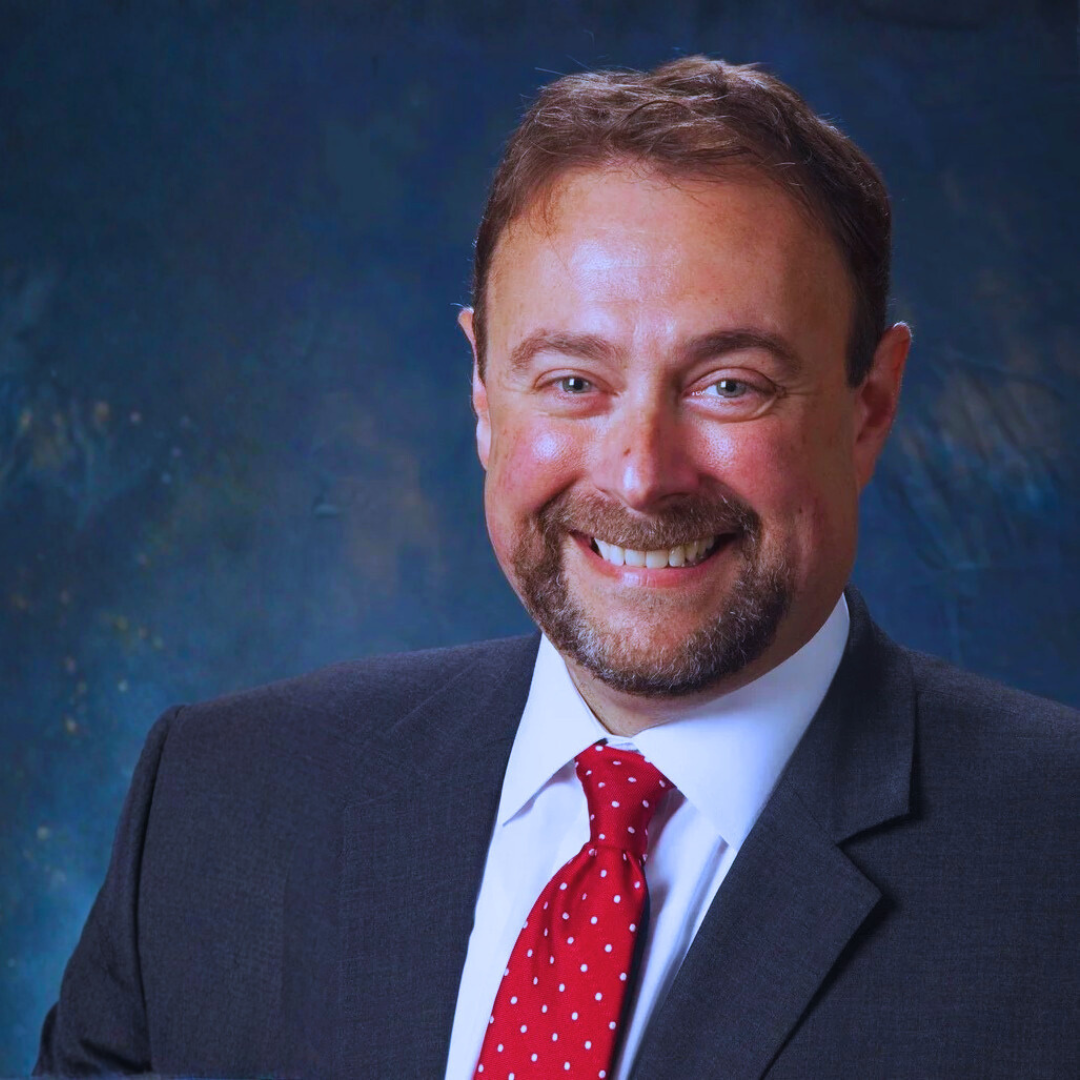
Senior Partner for Academic Leadership and Transformation
Dr. Bill McKinney

bill@centerforacademicinnovation.org
What is your personal adult learner story?
I am a first generation college graduate, and while I was not an adult learner, my late father, W.R. McKinney, was. He found himself $100 short of re-enrolling for his engineering studies at Penn State in the mid-1950s.
One hundred dollars is a lot for most students, even today.Considering 70 years of inflation, the $100 for my father is equivalent to roughly $1200 today. Bridging that financial gap is a tall order for many students. Unable to do so, my father enlisted in the U.S. Army. He served in Korea, was honorably discharged, and returned to the states, where he worked heavy construction and plumbing.
Shortly thereafter, he met Virginia Feudale, his future spouse, and my mother. When he told her that he was looking for another job, she told him that Gulf Oil was hiring lab technicians and that, since he excelled in high school chemistry, that he might be a good fit.
Times have certainly changed! Working as an entry-level lab tech without a post-secondary credential was very possible in the late 50’s and early 60’s.
He was soon hired by Gulf’s main research laboratory outside of Pittsburgh, where his talent was recognized. Gulf paid for him to return to his studies, in the evenings, at a Penn State branch campus. He was making progress toward his degree, but like many adult learners, “life happens.” In this case, I happened. My father’s focus soon turned to the needs of his young and growing family, and he ceased his studies, again.
In the decades that followed, he built a thriving career without a post-secondary credential. He was quite successful, but only to a point. There was always that limit past which he could not advance. He lacked his degree, but had no lack of experience and industry credentials. Had greater access to alternate credentials and credit for prior learning been available to my father, it is hard to predict how much further he could have gone.
His life story has always motivated me. American higher education continues to be a force for the positive transformation of individual’s lives and, subsequently, those of their families and communities.
What aspect of adult learning are you most focused on?
My current work focuses on three interconnected areas: building robust employer-educator ecosystems, building institutional capacity through professional development and technical assistance, and studying the impact of economic opportunity on democratic and civic engagement.
Favorite project you’ve worked on?
There are so many, but any project where I have had the privilege of working directly with faculty members and campus or system leadership are ones that I count among my favorites. These interactions have afforded me the chance to work with those who have the greatest opportunity to positively transform the lives of adult learners.
What excites you about the future of adult learning?
When it comes to everything from public policy to performance-based funding, he adult learner is no longer an afterthought. This makes for an exciting time for a renewed collaboration between employers and educators.
Beach, mountains, or city (vacation site)?
My wife and I are big fans of a “staycation,” where we can enjoy downtime with our cats and the migratory birds that flock to our backyard.