
The Dream That Wouldn’t Let Go
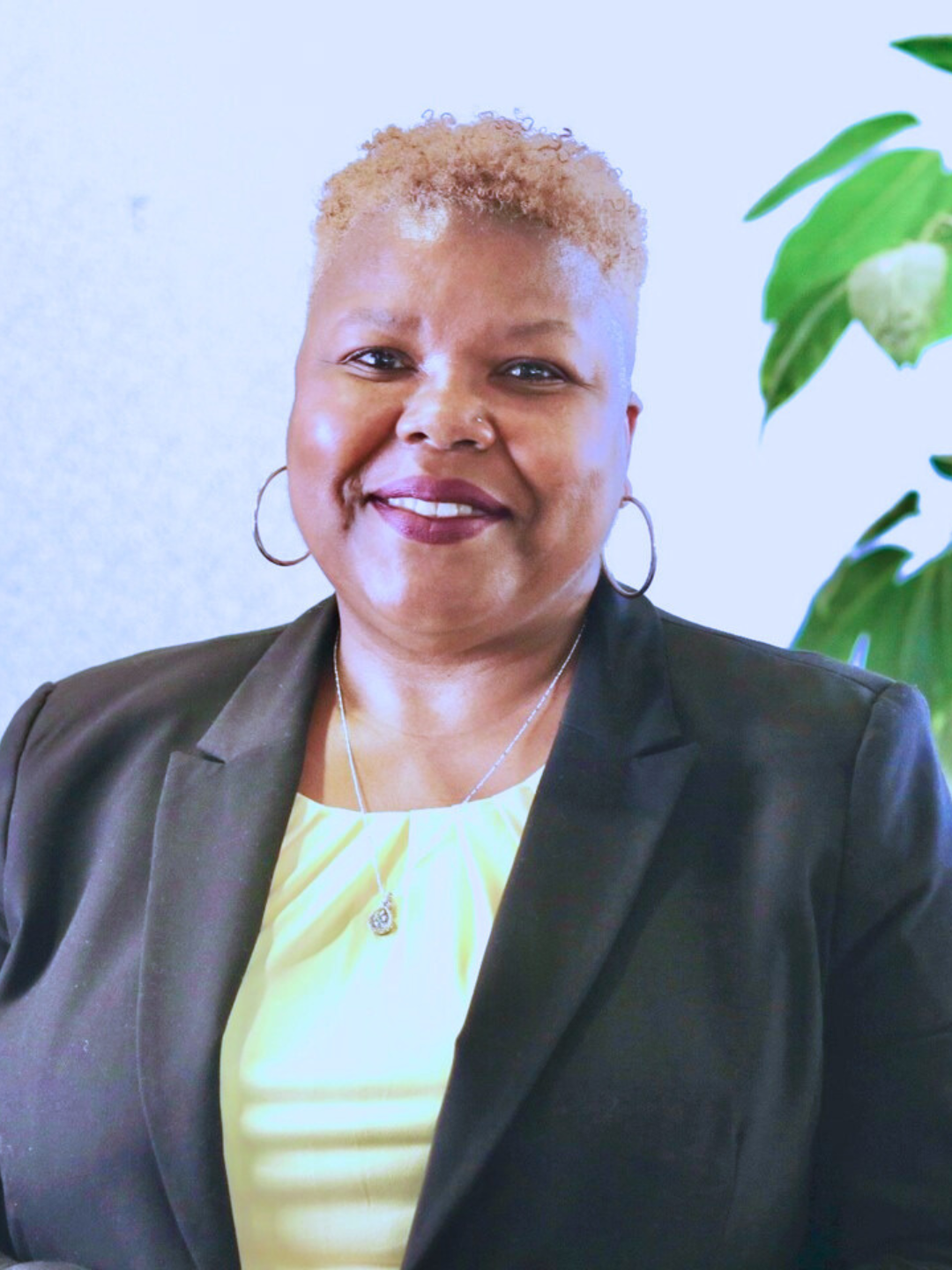
Michelle Cyrus
But the dream returned the next week.
And then again.
By the third time, she knew she couldn’t ignore it. “It’s not that I want to do this,” she thought. “It’s that I have to.”
Three days before the fall term began, Michelle walked into the financial aid office. By some miracle, her aid was approved AND every class she needed opened up, despite the waitlists.
The wheels were in motion.
Buoyed by her dream and a growing sense of purpose, Michelle threw herself into her studies. She juggled 18–22 credits a quarter while working 50–60 hours a week, raising two children, and supporting her military family. She graduated with a 3.6 GPA, earning her bachelor’s, then a master’s. Her dad’s pride made every sacrifice worth it.
But she wasn’t done.a
Michelle set her sights on a doctorate. The path was long and demanding—only 4.4% of doctoral degrees in the U.S. are earned by Black women—but she kept going. From the effects of COVID, a crushing depression landed her in a psych ward mid-dissertation of writing chapter five." Ready to quit, she called her chair. Her chair cried with her and said, “You’re going to get this degree. I’m going to help you.”
Michelle chose to believe that one voice over the darkness. The next day, she opened her laptop and kept writing.
When she finally crossed the stage, her father was no longer there to see it, but she carried his ashes in a small locket over her heart.
Her success sparked a ripple effect. Her daughter and husband earned a bachelor’s degree. Her son completed a master’s. Her husband—now cancer-free—is pursuing AI certificates. Even her nieces and nephews call her for help enrolling.
Today, Michelle serves as the Student Success Strategy Manager for Michigan’s Office of Sixty by 30, helping aspiring students enroll and persevere. Just as she did.
She reminds learners that education isn’t always a straight line. “Sometimes you’re just lifing,” she says. “You start, you stop, you shift. But community and a few brave mentors can carry you when willpower can’t.”
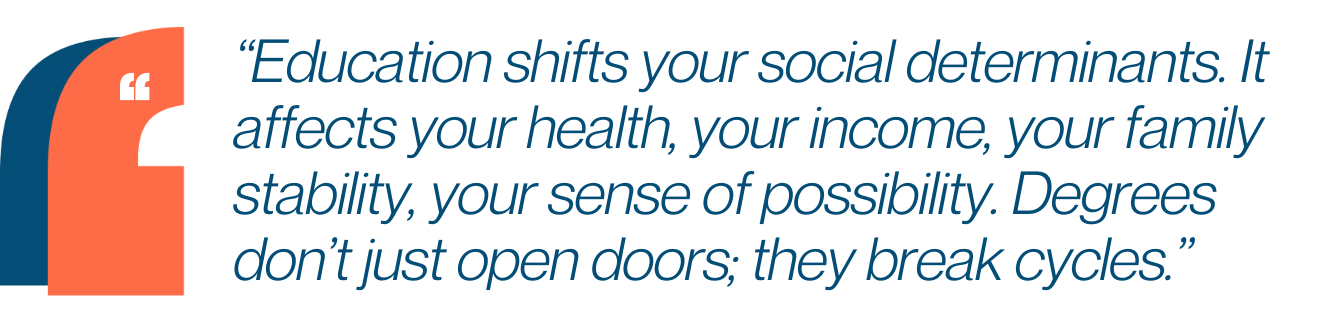
Michelle often reflects on how education changes lives AND the conditions of those lives. “Education shifts your social determinants,” she explains. “It affects your health, your income, your family stability, your sense of possibility. Degrees don’t just open doors; they break cycles.”
Research confirms what Michelle knows firsthand: higher levels of education are linked to better health outcomes, higher earnings, lower unemployment, and longer life expectancy. People with more education are also more likely to have access to quality healthcare, stable housing, and intergenerational mobility.
Michelle followed her dreams—literally.
To her, education is more than achievement. “It’s a superpower,” she says, “not just for me, but for my family, my community, my city.
Michelle Cyrus’s story begins with her father, Robert Lee, who always told her, “There should never be a time in your life when you’re not learning.” He wanted her to earn a business degree and work alongside him. But at seventeen, Michelle had other plans. She joined the U.S. Army, met her husband, Joseph, and later built a good life through hard work and steady jobs.
Earning a college degree? She wanted no part of it.
Ironically, in her mid-thirties, Michelle found herself working full-time at a university. Yet she was still convinced that college wasn’t for her. Then, one September, she had a strange dream: she was walking across a graduation stage in a cap and gown. The next morning, she laughed as she described it to Joseph.
Adult Learner, Student Success Strategy Manager
Center for Academic Innovation team member Bridgett Strickler interviewed Terri Cummings and authored this narrative. To explore additional adult learner stories, visit BridgettStrickler.com or follow Bridgett on LinkedIn, where she regularly writes about adult learner comebacks. To learn about Bridgett’s deeply personal connection to this work, be sure to watch her TEDx talk, “If you’re going back to school, community may be the medicine.”